Processing Your Payment
Please do not leave this page until complete. This can take a few moments.
- News
-
Editions
-
- Lists
-
Viewpoints
-
Our Events
-
Event Info
- On The Road with Mainebiz in Waterville
- Small Business Forum 2025
- Outstanding Women in Business Reception 2025
- On The Road with Mainebiz in Bath
- 60 Ideas in 60 Minutes Portland 2025
- 40 Under 40 Awards Reception 2025
- On The Road with Mainebiz in Lewiston / Auburn
- 60 Ideas in 60 Minutes Bangor 2025
Award Honorees
- 2025 Business Leaders of the Year
- 2024 40 Under 40 Honorees
- 2024 Women to Watch Honorees
- 2024 Business Leaders of the Year
- 2023 NextUp: 40 Under 40 Honorees
- 2023 Women to Watch Honorees
- 2023 Business Leaders of the Year
- 2022 NextUp: 40 Under 40 Honorees
- 2022 Women to Watch Honorees
- 2022 Business Leaders of the Year
-
-
Calendar
-
Biz Marketplace
- June 30, 2025
- June 16, 2025
- June 2, 2025
- May 19, 2025
- May 5, 2025
- April 21, 2025
- April 7, 2025
- March 24, 2025
- March 10, 2025
- Feb. 24, 2025
- Feb. 10, 2025
- Jan. 27, 2025
- Jan. 13, 2025
- 2025 Book of Lists
- Dec. 16, 2024 edition
- Dec. 2, 2024 Edition
- November 18, 2024 Edition
- November 4, 2024 Edition
- October 21, 2024 Edition
- October 7, 2024 Edition
- September 16, 2024 Edition
- September 2, 2024 Edition
- August 19, 2024 Edition
- August 5, 2024 Edition
- July 22, 2024 Edition
- July 8, 2024 Edition

Appointed as chancellor of the University of Maine System in March, James Page comfortably wears two hats — one labeled "business" and the other "academia." As the top administrator of the seven-ca
- OpinionOpinion
Seeking trade opportunities beyond our borders requires financial savvy
Sterling Kozlowski President, Maine District, Keybank - Focus on Western Maine
 Focus on Western Maine
Former Franklin County Chamber director opens a trio of food-related businesses in New Sharon
Bob Mentzinger - Focus on Western Maine
 Focus on Western Maine
Three Oxford-area companies anticipate more business thanks to casino
Matt Dodge
Consider investing in facilitated team building
Workplace teams are not just collections of individuals doing parallel activity.
- Focus on Western Maine
 Focus on Western Maine
A local lawyer launches a crusade to revive the town with 14,000 feet of steel cable
Sara Anne DonnellyFor more than a century, Rumford's downtown has been bookended by two powerful residents: the paper mill to the east and Pennacook Falls to the west. The mill here has long been the center of the town's economy.
Making strides
Mal LearyRetirement savings projected Budget expected to be $70-$80 million smaller Reforms credited with impact State retirement system officials told the Legislature and the LePage administration they will ne

Innovation engineer John Karp helps companies zero in on what works
Carol CoultasHere's an opening line that John Karp uses when meeting Maine manufacturers:“Would you like a chance to get your new products to market up to eight times faster with 60% less risk?”
- OpinionOpinion
Pardon, our slip is showing
Carol CoultasYou never get too full of yourself in journalism. Just when you think you're on a roll, reality rears up and slaps you upside the head.
Today's Poll
We're roughly halfway into the unofficial summer tourism season, with Memorial Day and July 4th behind us.
Last week, AAA forecast record traffic for the holiday weekend, particularly with July 4 falling on a Friday — and the heavy traffic heading south on the Maine Turnpike Sunday evening bears out that forecast.
At the same time, rainy weekends have also been part of the summer mix.

The Giving Guide
The Giving Guide helps nonprofits have the opportunity to showcase and differentiate their organizations so that businesses better understand how they can contribute to a nonprofit’s mission and work.
Learn More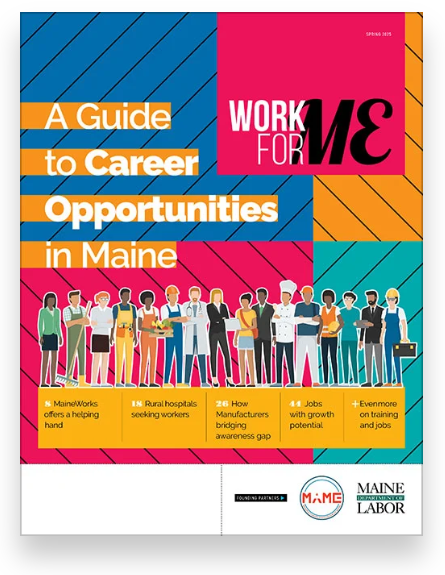
Work for ME
Work for ME is a workforce development tool to help Maine’s employers target Maine’s emerging workforce. Work for ME highlights each industry, its impact on Maine’s economy, the jobs available to entry-level workers, the training and education needed to get a career started.
Learn More
Groundbreaking Maine
Whether you’re a developer, financer, architect, or industry enthusiast, Groundbreaking Maine is crafted to be your go-to source for valuable insights in Maine’s real estate and construction community.
Learn more-
The Giving Guide
The Giving Guide helps nonprofits have the opportunity to showcase and differentiate their organizations so that businesses better understand how they can contribute to a nonprofit’s mission and work.
-
Work for ME
Work for ME is a workforce development tool to help Maine’s employers target Maine’s emerging workforce. Work for ME highlights each industry, its impact on Maine’s economy, the jobs available to entry-level workers, the training and education needed to get a career started.
-
Groundbreaking Maine
Whether you’re a developer, financer, architect, or industry enthusiast, Groundbreaking Maine is crafted to be your go-to source for valuable insights in Maine’s real estate and construction community.
ABOUT
NEW ENGLAND BUSINESS MEDIA SITES
No articles left
Get access now
In order to use this feature, we need some information from you. You can also login or register for a free account.
By clicking submit you are agreeing to our cookie usage and Privacy Policy
Already have an account? Login
Already have an account? Login
Want to create an account? Register