
Photo / Tim Greenway
Bath Economic and Community Development Director Misty Parker with Brett Johnson and his dog Mateo at 66 Front St. in Bath.
Please do not leave this page until complete. This can take a few moments.
 Photo / Tim Greenway
Front Street in Bath boasts a mix of retail shops, restaurants and service businesses.
Photo / Tim Greenway
Front Street in Bath boasts a mix of retail shops, restaurants and service businesses.
Long known for its shipbuilding, the city of Bath also has a vibrant downtown retail and restaurant industry — which is relatively rare today among many Maine cities.
Mainebiz visited “the city of ships” recently and met with civic leaders, business owners and retailers to learn what the secret sauce is that makes Bath an increasingly popular place to live and visit.
Bath’s recipe for success includes a combination of ingredients — independently owned businesses that focus on staying relevant for year-round residents as well as summer visitors, strong support from city leaders and an active merchants association.
The city’s abundant historic charm, nurtured by local landlords, gives Bath a solid sense of place and contributes to a growing influx of younger families. Its population is 8,800.
The heart of the downtown district is Front Street, where close to 30 shops, cafes and banks line four blocks of tidy brick buildings, many of which date to the 1800s. There are four bookstores, a gallery, boutiques and gift shops, the very busy Cafe Creme, a toy store, a pet store, a brewpub, a combination deli and ice cream shop, two furniture stores, Springer’s Jewelers, Reny’s department store, an IGA grocery store and a newly opened yarn shop, one of two now in town.
The diverse mix includes service businesses, too: real estate agents, financial advisers, a framer, barber shop, hair salon, an optometrist and a yoga studio.
Just around the corner on Centre and Water streets are the Bath Sweet Shoppe, a butcher shop, Bath Natural Market, another gallery, an Italian pastry shop, a deli, several restaurants and a large co-working space that’s become a vital community connector.
All are locally owned and operated.
More cafes and restaurants are clustered on surrounding streets, and one of two parks along the Kennebec hosts seasonal food trucks. The rustic riverfront Bath Freight Shed is home to a Saturday farmers’ market.
Misty Parker, the city’s economic and development director, says the range of shops, restaurants and businesses provides a healthy mix that’s key to attracting visitors and perhaps most importantly, servicing year-round residents.
A recently adopted fit-up grant program will be instrumental in helping businesses seeking to open or expand, by providing matching funds up to $12,500. Parker said it’s modeled after Freeport’s downtown grant program.
Maine Street Design Co.’s Brett Johnson plans to apply to assist in his full-blown refit of the street-level space at 66 Front St., which is owned by Benjamin St. John. The House of Logan clothing shop vacated the spot last spring and Johnson, whose interior design business, furniture and home hardware business is down the street, snapped it up.
“What’s been happening here in Bath is almost better than what Portland’s Old Port became when it was being developed,” Johnson says.
Maine Street Design will have a new neighbor in the building, when local clothing maker Peace House Studio moves into the lower level space, which had been vacant for years, early in 2026. Co-owner with his wife Kate, Nick Bergmann is excited to open the company’s first retail space and is bullish on Bath.
“We moved here from Oakland, Calif., and Bath has a similar feel; it has an artist feeling to it. And with the community events, the civic pride and the political diversity here, this is a good place for our kids, too.”
Benjamin St. John purchased the prominent Front Street building in 2021 for $1.3 million, from the Sagadahock Real Estate Association; one of several he now owns. The association was run by the Morse family, which has a long history in the region in shipbuilding and lumber. Over the years the Morses invested heavily in Bath’s downtown, acquiring a total of 19 buildings.
After more than a century of property ownership, in 2017 the family began divesting of some of its holdings and by 2022 had sold nearly all of its downtown buildings.
John Morse IV told Mainebiz he gave retailers first dibs and several, including Reny’s, Now You’re Cooking, Brackett’s Market and Lisa-Marie’s Made in Maine, are now their own landlords.
The sales marked a turning point in the downtown district, which for years had been stewarded by the Morse family. Jane Parker Morse had taken over running the family real estate business after her father passed away in 1993 and she was instrumental in helping the downtown district prosper, until her death in 2016.
“Jane was quite active in filling empty spaces where people had moved out or couldn’t make a go of it,” John Morse says. “She was always shopping around, looking for a store that would fit into Bath.
“We would offer them a rent that for the first year was what you might call subsidized, to get them in here,” Morse explains. “We tried to keep the rents at a level at which we could make a profit but the people who were renting could also make a profit.
“About the time my father died, we had paid off all of the mortgages, so we could charge lower rents. I looked at it as doing good business — you’re making a couple of dimes and also allowing the people to make a nickel or two.”
Morse was purposeful in his selection of buyers when he decided to sell, with a preference for locals he felt would be invested in Bath, not just financially but philosophically too.
Sean Ireland, owner of Windward Properties, was one who fit the bill. Ireland purchased from Morse four distinctive downtown properties and undertook significant renovations. His rehab of the Medanick building at 160 Front St. won design and preservation awards.
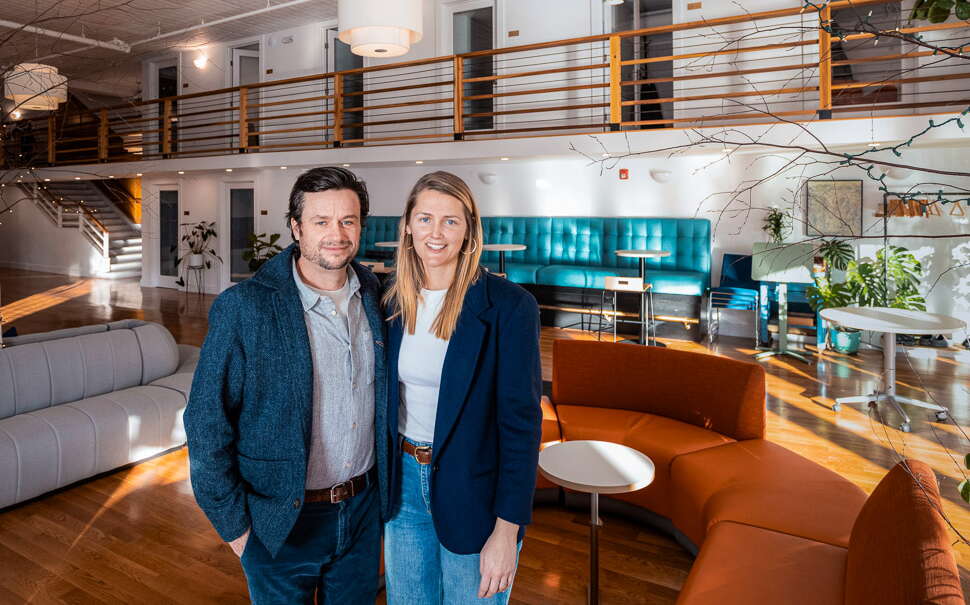
Ireland’s biggest project, with partner and real estate broker Mandy Reynolds, was developing the Grant building at 31 Centre St., a few doors down from Front Street, into a mixed-use commercial, residential and co-working space, called Union & Co. The building had been a Grant’s department store that closed in the 1960s and was later occupied by draftsmen from Bath Iron Works, but it had been vacant for 10 years.
At 23,000 square feet, “It was a white elephant,” Reynolds says. “It had been listed for sale or lease for six years — but people couldn’t figure out what to do with it.”
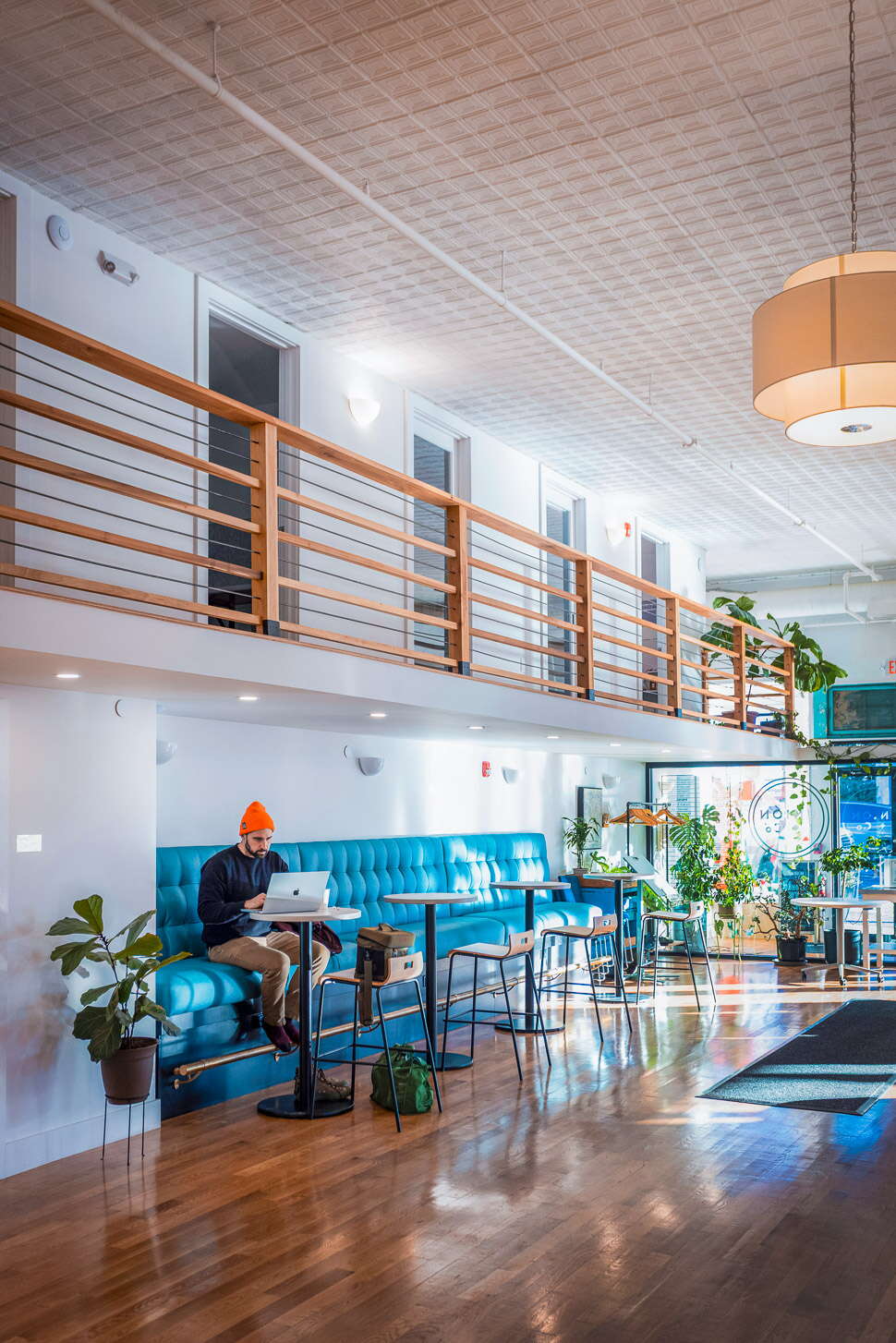
With tax-increment financing and historic tax credits, they built out four residential units upstairs, commercial space and art studio space and put 74 solar panels on the roof.
“We looked at this building as a model, a difficult model, but we knew that Union & Co. was something that Bath needed and that we could make work,” Reynolds says.
Union & Co. now has 80 co-working members and has become a bellwether for other buildings around it and a vital community connection space, even serving as an indoor ‘park’ for safe gatherings during the pandemic.
Parker calls the project “the largest investment in downtown in over a decade.”
Ireland says making the building mixed-use was the way to make it work, and fully utilizing every floor of a building is core to creating healthy downtowns.
“From a development strategy, ours has always been to fully occupy these buildings. The Morse family had done a really good job of maintaining the buildings, but the upper floors were often empty. Each one I bought was either empty or unoccupied, but we’re full now,” Ireland says.
“If you want a full downtown, you have to fill entire buildings. We have to bring back both commercial and residential to these buildings. Residential upstairs supports ground floor retail.”
Ireland says there are no elevators and a sprinkler system was a costly addition.
“That’s the future of our downtowns though; people want to live downtown where they can walk to work and shops,” he says.
Ireland also bought and renovated 141 Front St. — which had not been owned by Morse — for friends Mike Theriault and Terry Geaghan who opened Bath Brewing at the site.
“It’s one of my proudest projects,” Ireland says. “Bath hadn’t seen that level of renovation. It was pre-COVID and the brewery was very successful.”
Heather Fear co-owns longtime Front Street anchor, Now You’re Cooking, one of several businesses that have been in town for 20-plus years.
She believes downtown Bath also thrives, “because our customers and community love in-person experiences. For example, at Now You’re Cooking, if they’re going to invest in a new set of cookware, our customers want to feel the weight of the pans in their hands and have their questions answered by a knowledgeable staff person.

“If they are looking to upgrade their espresso machine, we can demo it for them so they can see exactly what is needed to make the perfect cup at home,” Fear says.
“It’s not just our store; all of the shops, restaurants and cafes in downtown are delivering top-notch customer service and in-person shopping that’s unique and personalized.”
“There was some concern this summer,” Fear says, “when a few long-standing businesses retired, about what would become of the empty storefronts.
“We’re already seeing new owners reimagining spaces and opening new businesses. I think downtown Bath has become such a destination to shop, eat, and hang out, that if there is an empty storefront, it won’t stay that way for long.”
John Morse says having shops that are independently owned is key. “When the owner is in the store, they’re looking to take care of you. They’re there to help you and that’s what people like about Bath.”
Ireland says, “As a developer and as owners, you have to be both unique and relevant. If you’re just one or the other you’ll go out of business.”
Amanda McDaniels, who leads Main Street Bath, says the city hasn’t always been as vibrant as it is now.
“Bath had been through some rough times, especially in the last few decades of the last century,” she says.
“Since Main Street Bath’s inception, the goals of a connected and thriving business community, hosting a robust community event schedule and welcoming tourists and summer residents into a friendly and memorable experience has truly paid off.”
Main Street Bath was the first accredited Main Street program in the state and will be 25 years old next year. “We have four committees that work on holistic ways to support, preserve and promote a vibrant historic downtown,” McDaniels says.
The organization hosts Bath Heritage Days in July, more than two dozen free summer concerts, a month-long holiday event in December and a half dozen other events that support shop small initiatives.
Jennifer DeChant, who with her family owns Bath Sweet Shoppe, serves on the city council and chairs the Main Street Bath economic vitality committee. DeChant is also a former state legislator and has lived in town for 25 years.
“The change in downtown Bath has been dramatic,” she says. “Decisions being made now rival those that were made in the 1970s to reject urban renewal in favor of investing in the historic appeal of our downtown.”
DeChant says Main Street Bath coordinates small business assistance in the form of training and consulting, and the Bath economic development committee reviews ordinances to reduce barriers to doing business and ushers grants.
Ireland is seeing a population shift, with more young families moving to town.
“People are skipping right over Portland and coming up to the southern midcoast, from Brunswick to Damariscotta. Bath as the county seat, and Rockland, are service centers; they’re beautiful communities with water all around,” he says.
“Portland is now like lots of other places; if you really want the Maine lifestyle, it’s Bath and these midcoast communities.”
“John Morse did an amazing job taking the time to transition their real estate portfolio in a way that allowed Bath to not fall apart during that transition,” Ireland says, “but also make changes and plan for the future at the same time. It was a real balancing act of sorts.
“What remains is a downtown more committed than ever to independent, local, brick and mortar businesses that support the needs of the community.”








0 Comments