Jackson Lab awarded $30M to create digital heart model
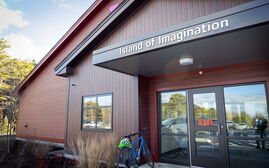
 File Photo / Courtesy Jackson Laboratory
Jackson Laboratory, a genetics and genomic medicine organization headquartered in Bar Harbor, was awarded up to $30.6 million over three years to create digital heart models.
File Photo / Courtesy Jackson Laboratory
Jackson Laboratory, a genetics and genomic medicine organization headquartered in Bar Harbor, was awarded up to $30.6 million over three years to create digital heart models.
Jackson Laboratory, a genetics and genomic medicine organization headquartered in Bar Harbor, was awarded up to $30.6 million over three years to create digital heart models, with a goal to better predict the safety and effectiveness of drug treatments.
The lab is the first research institution in Maine to be awarded a grant from the Advanced Research Projects Agency for Health, or ARPA-H. The lab is a partner on related projects.
Computing biology
The award came through an ARPA-H computational program designed to develop computer models that mimic real human biology to study the safety and effectiveness of new drug candidates, with a goal to ensure more prompt approval of promising medicines.
The money will support the lab’s efforts to create digital heart models rooted in both mouse and human biology that reflect a wide range of human cardiovascular differences. These models will allow researchers to better predict the safety and effectiveness of drugs across many genetic backgrounds and physiological variations, thus reducing the need for early-stage clinical trials.
“ARPA-H seeks transformative biomedical breakthroughs happening all across the country to support with significant research funding,” said U.S. Sen. Susan Collins, R-Maine, who announced the award.
The lab was one of eight awardees across the country.
Related partnerships
Last year, the lab joined other ARPA-H projects pertaining to personalized medicine through artificial-intelligence-driven cancer and prescription drug research.
The projects represent a combined $60 million investment aimed at advancing biomedical research through data-driven approaches and AI.
One project, led by the University of Illinois Urbana-Champaign, aims to develop an automated platform for producing personalized 3D cancer models. Edison Liu, Jackson Lab’s president emeritus, is a contributor.
Traditionally, cancer studies rely on 2D cultures or animal models that don't fully capture the complexity of human tumors, according to a news release. In recent years, scientists have turned to 3D clusters that better mimic the behavior of human tissue and to explore how individual differences influence drug metabolism and responses.
The project uses AI and robotics to grow tumor cells in 3D cultures and monitor growth patterns to optimize conditions.
The project could help researchers study multiple drugs’ effects on various tumor types more efficiently and develop personalized cancer therapies by rapidly growing and analyzing an individual patient’s tumor cells.
The other ARPA-H project is led by Columbia University, with participation by Shuzhao Li, an associate professor with Jackson Laboratory.
The initiative seeks to understand individual variability in drug responses.
“There are all sorts of factors that influence how someone metabolizes and responds to drugs,” Li said. “Their genetics, diet, and environmental exposure all play a role.”
Li’s team is collaborating with researchers from Columbia, Emory, Brown, Harvard and Mayo Clinic to analyze blood samples from patients with metabolic disorders. The data could reveal how different factors affect drug metabolism and efficacy, potentially leading to more effective, personalized treatments.
High-risk, high-reward
The ARPA-H projects are considered high-risk, high-reward, aiming to achieve biomedical breakthroughs.
“These projects both highlight a fundamental belief at JAX that technology will advance biology,” said Liu.
Mainebiz web partners
Most Recent


Most Recent










0 Comments