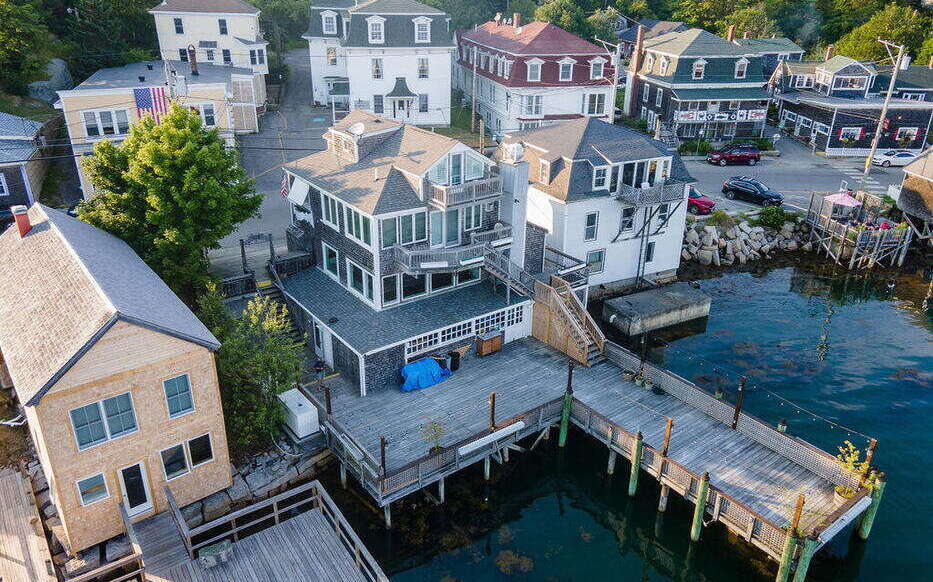
File Photo / COURTESY THE ISLAND AGENCY
Downtown Stonington’s waterfront features hospitality and marine industries — both facing an employee crunch due to limited housing.
Please do not leave this page until complete. This can take a few moments.
 Photo / Courtesy Island Workforce Housing
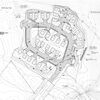
The nonprofit Island Workforce Housing developed a housing complex called Oliver’s Ridge in Deer Isle.
Photo / Courtesy Island Workforce Housing
The nonprofit Island Workforce Housing developed a housing complex called Oliver’s Ridge in Deer Isle.
The lack of affordable year-round and seasonal housing in the Hancock County island towns of Deer Isle and Stonington is thwarting many employers from finding enough workers, leaving a shortfall of one in seven positions unfilled.
“Without affordable housing options that match these income levels, the island risks ongoing labor shortages, declining school enrollment and a shrinking year-round population and tax base,” according to the final report by the Interlocal Housing Task Force, which studied the towns of Deer Isle and Stonington (both of which are on the larger island body of Deer Isle).
Established in October 2024 at the request of the select boards of each town, the task force examined the island’s housing landscape and developed recommendations.
While some development is underway, it’s not enough, the report concludes.
In 2023, the nonprofit Island Workforce Housing opened 10 units of duplex housing in Deer Isle. It recently broke ground on three modular buildings comprised of 12 one- and two-bedroom units in Stonington.
The nonprofit HomePort has a project underway to convert a former nursing home into 23 apartments in North Deer Isle.
More is needed, the report says, citing “an ongoing and urgent workforce shortfall.” Of the nearly 800 year-round jobs available in the two towns, about 100 go unfilled because of a lack of housing, especially for first-time homebuyers and those in the lower-income bracket.
Two in five workers earn 60% or less of the area median income. Many of them are in retail, hospitality, fishing, caregiving and seasonal work.
“For these households, market-rate rentals and traditional homeownership remain out of reach — even when units are available — due in large part to housing price and property valuation escalation that began during the pandemic,” the report says.
As of 2022, Stonington’s population was 1,040, and Deer Isle 2,162. In Stonington, 65% of employment is in tourism, hospitality and retail and wholesale marine-related trade.
Deer Isle’s major industries include construction, schools, municipal government, wholesale trade, health care and social assistance.
But employers identify the lack of year-round rental and ownership options as a major barrier to recruitment and retention.
“Half of all surveyed employers reported that employees or new hires have turned down job offers specifically due to the inability to find year-round housing,” the report says.
Some workers make do by commuting from the mainland. The report counted at least 279 workers who commute to the island, with a fifth traveling more than 50 miles each way. Some seasonal employees commute as far as 65 miles.
Nearly half of businesses have turned to providing their own housing assistance.
But persistent workforce challenges limit the sustainability and growth of both year-round and seasonal industries across all sectors. Compounding the issue, limited new housing development and the rapid growth of short-term rentals, leaving over 40% of year-round homes in both towns vacant or seasonal.
The cost of buying or renting a home is often out of reach for potential employees.
Home prices in Deer Isle and Stonington make them among “the least affordable communities in the state,” the report says.
Since January, the median sale price of 45 residential sales across both towns was $440,000.
But nearly 20% of households in each community live below the poverty line and roughly one-quarter of island households earn less than $25,000 annually.
“These residents form the backbone of the local workforce but are most vulnerable to housing insecurity, displacement or long commutes from off-island communities,” the report says.
Other factors hurt the market.
“The cost of building affordable starter homes has risen dramatically at the same time that the real estate markets in many coastal communities have driven up property valuations,” the report says. “Together, these market forces have combined, since the housing-related recession of 2008, to create a crisis of underproduction and a shortage of millions of homes nationally.”
The report found there’s a “significant amount of undeveloped land” in the two towns. Deer Isle has about 550 vacant parcels larger than one acre and Stonington has about 100. Deer Isles has 200 parcels of 20 acres or more and Stonington has 30.
“These findings indicate opportunities for both small-scale infill and larger multi-unit or community developments,” the report says. “Parcels located within existing infrastructure networks and ‘growth areas’ identified in municipal comprehensive plans are particularly promising.”
The report advocates for municipal engagement to encourage development and housing assistance.
Recommendations include:
“Taking a full spectrum approach to these identified housing gaps requires coordination of efforts,” the report says.









0 Comments