Processing Your Payment
Please do not leave this page until complete. This can take a few moments.
Education & Training
-

Stonewall Kitchen heads 'home' to capitalize on recent acquisitions
November 19, 2021The York-based retailer plans to close its cooking school by the end of this year and pursue a new line of business in home goods.
November 19, 2021
Music center in Yarmouth begins $5M renovation
November 15, 2021317 Main has started a $5 million renovation to double its size and increase its music programming offerings.
November 15, 2021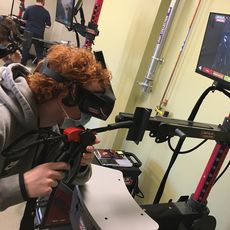
At SMCC, virtual welding provides new hands-on boost to workforce training
November 12, 2021Southern Maine Community College has been investing in workforce training in the welding trade for the past few years, with new labs and programs. Virtual welding simulators will provide immediate feedback.
November 12, 2021
North Yarmouth Academy ice arena will modernize with $5M makeover
November 11, 2021The project, funded by a $4 million gift and a planned fundraising drive, will add new locker rooms, seating and amenities to the ice sports arena. It is named after an NYA graduate and hockey star, the late Travis Roy.
November 11, 2021
Country lawyer: Rural practices have rewards, but many areas of Maine need attorneys
Updated: November 15, 2021A rural law fellowship helps introduce new attorneys to country practices. But a widespread shortage in rural areas persist, particularly as older lawyers retire. "We need to make sure access to justice doesn’t depend on your ZIP code," says one
Updated: November 15, 2021
Future-proofing Maine Law: Leigh Saufley reflects on school's move, diversity and more
Updated: November 15, 2021In an interview with Mainebiz, Leigh Saufley, dean of the University of Maine School of Law, talks about this year's incoming class, new academic programs and the significance the school's move to downtown Portland.
Updated: November 15, 2021
With climate changing, UMaine gets funding to research heat-tolerant potatoes
November 10, 2021The University of Maine received $510,104 in federal funding to conduct research on potato breeding in Maine to make the crop more heat-tolerant and resistant to pests.
November 10, 2021
Mitchell Institute names USM administrator as new president, CEO
November 10, 2021The Mitchell Institute, a nonprofit founded by former U.S. Sen. George Mitchell, has named Jared Cash as its new president and CEO, effective Jan. 1.
November 10, 2021
Bucking national trend, UMaine enrollment soars to highest ever
Updated: November 5, 2021Enrollment this fall is close to 12,000, representing a 2.1% increase over 2020, as the Orono school continues to attract students from out of state.
Updated: November 5, 2021
UMaine System puts employees on notice over vaccination deadline
Updated: November 1, 2021Lack of compliance with the Dec. 8 deadline would jeopardize the system's eligibility for federal grants and contracts, Chancellor Dannel Malloy warns in a note to the UMaine System community.
Updated: November 1, 2021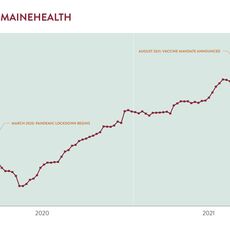
Citing 'unprecedented' demand for medical care, MaineHealth aims to ramp up capacity
October 27, 2021Open positions have more than doubled throughout Maine's largest health care system since the start of the pandemic, which has compounded a workforce shortage that has been building over time.
October 27, 2021
Colby launches laboratory training for future entrepreneurs
October 26, 2021The Halloran Lab for Entrepreneurship will open next year, funded by the donation of a 1984 graduate, Todd Halloran, an investor and entrepreneur himself.
October 26, 2021
Maine aquaculturists issue nation’s first occupational standards for growing industry
Updated: October 21, 2021The standards, based on a collaboration between farmers and the educational community, aim to help ensure that Maine aquaculture businesses have the skills and training needed to compete in a global market.
Updated: October 21, 2021
Bates workers say college has threatened against unionizing attempt
October 20, 2021An attempt to unionize by some employees of the Lewiston college has ratcheted up with an allegation that Bates has threatened workers for mounting the organizing campaign.
October 20, 20215 Maine workforce training programs may get $4.6M in federal funds
October 20, 2021The training and workforce development projects in Maine may share $4.6 million in funding, if approved by Congress.
October 20, 2021
UMaine plans $75M ‘factory of the future’ for high-tech bio-manufacturing
October 20, 2021The new laboratory, as large as 92,000 square feet, would advance research into large-scale, bio-based additive manufacturing using advanced technologies such as artificial intelligence and large 3D printers.
October 20, 2021
Most Recent