
Courtesy photo
Malinda Gagnon is CEO of Uprise Partners.
Please do not leave this page until complete. This can take a few moments.
As we enter 2026, many businesses are deep in strategy — reviewing performance, planning budgets and setting priorities. It is a time when business leaders take stock of what worked, what didn’t and what needs to shift to stay competitive.
According to a recent Forbes article by Bernard Marr, 78% of organizations are using AI, and 66% of people say they use it regularly.
Given those statistics, chances are that your organization has worked on policies, or at least had internal conversations, about how artificial intelligence fits into your workflow. If you haven’t, now is the time. Work with your cybersecurity, IT and legal teams to create a policy that meets your compliance standards and makes sense for the unique needs of your business.
Some key things to keep in mind when creating an AI policy include the following.
Data privacy and security: Define what types of data employees can and cannot input into AI tools to avoid exposing confidential or regulated information.
Accuracy and oversight: Clarify when human review is required, especially for financial, legal, or customer-facing outputs.
Tool approval and access: Specify which AI platforms are authorized for use and outline a process for requesting new tools.
Regulatory compliance: Ensure the policy aligns with industry-specific regulations.
Creating a policy, however, is just the first step; the real value comes from understanding where AI fits into your operations and your business — and how to implement it responsibly.
Once your policy is established, look for areas where AI can offer easy improvements. Start by pinpointing a few tasks that you’re required to do on a weekly or monthly basis.
The goal is to introduce AI where it has a clear, measurable impact on productivity. For example, if you spend hours each week creating status reports, AI can draft them for you using your notes or data inputs. You can then refine the draft instead of starting from scratch, cutting the process from hours to minutes.
Select a few champions within your organization who can pilot tools with oversight from IT. Their job isn’t to become AI experts — it’s to understand what works, what doesn’t and which capabilities can help your employees be more productive so that the business can improve and scale.
Experiment with safe, non-sensitive inputs and get a sense of where different AI platforms can reduce friction in daily operations.
Starting small creates early wins and reduces unnecessary spending. It also helps your team build familiarity and confidence before investing in broader AI-driven workflows.
AI is great at pulling in information from all over the Internet — but it isn’t necessarily great at confirming or verifying that information.
It is still the job of humans to check for accuracy. Everything produced with AI should be reviewed for accuracy, tone and relevance. These are not set-it-and-forget-it tools; they’re technology that still requires human judgment.
Equally important: work with your IT team to verify that your AI tools are appropriately secured and configured. Access controls, data permissions and usage guidelines must be clearly defined to avoid unintended exposure of sensitive information.
Over the next few years, we will continue to see a massive adoption curve as businesses realize the efficiencies that AI provides.
And while AI is a powerful tool, it won’t replace human logic, decision-making or the relationship-driven work that remains central to businesses. Treat it as an addition to your toolbox, not a substitute for the expertise of your team.
Everything AI produces should be vetted, finalized and approved by your team. After all, at the end of the day, it’s still humans you’re doing business with.
Malinda Gagnon is the CEO of Uprise Partners, a cybersecurity and IT managed services provider based in Portland. She can be reached at hello@uprisepartners.com
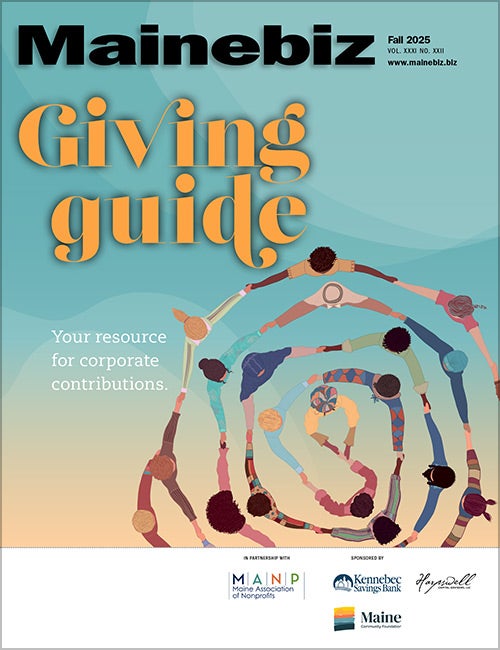
The Giving Guide helps nonprofits have the opportunity to showcase and differentiate their organizations so that businesses better understand how they can contribute to a nonprofit’s mission and work.
Learn More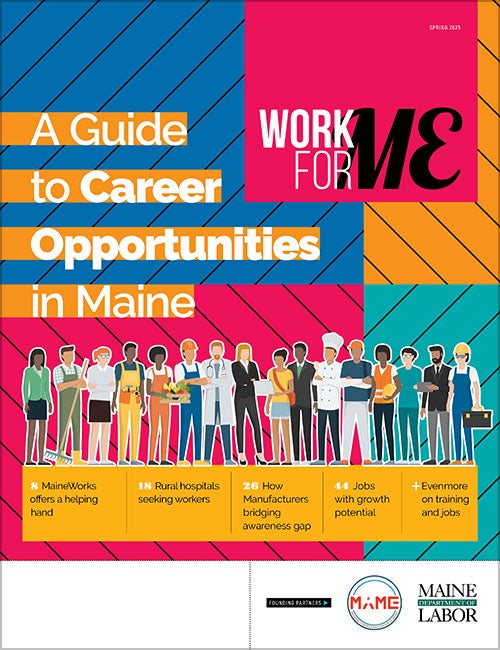
Work for ME is a workforce development tool to help Maine’s employers target Maine’s emerging workforce. Work for ME highlights each industry, its impact on Maine’s economy, the jobs available to entry-level workers, the training and education needed to get a career started.
Learn More
Whether you’re a developer, financer, architect, or industry enthusiast, Groundbreaking Maine is crafted to be your go-to source for valuable insights in Maine’s real estate and construction community.
Learn moreThe Giving Guide helps nonprofits have the opportunity to showcase and differentiate their organizations so that businesses better understand how they can contribute to a nonprofit’s mission and work.
Work for ME is a workforce development tool to help Maine’s employers target Maine’s emerging workforce. Work for ME highlights each industry, its impact on Maine’s economy, the jobs available to entry-level workers, the training and education needed to get a career started.
Whether you’re a developer, financer, architect, or industry enthusiast, Groundbreaking Maine is crafted to be your go-to source for valuable insights in Maine’s real estate and construction community.
In order to use this feature, we need some information from you. You can also login or register for a free account.
By clicking submit you are agreeing to our cookie usage and Privacy Policy
Already have an account? Login
Already have an account? Login
Want to create an account? Register
In order to use this feature, we need some information from you. You can also login or register for a free account.
By clicking submit you are agreeing to our cookie usage and Privacy Policy
Already have an account? Login
Already have an account? Login
Want to create an account? Register
This website uses cookies to ensure you get the best experience on our website. Our privacy policy
To ensure the best experience on our website, articles cannot be read without allowing cookies. Please allow cookies to continue reading. Our privacy policy










0 Comments